CALL
CALL TEXT
TEXT
The Difference Between Water Treatment, Water Filtration, and Water Purification
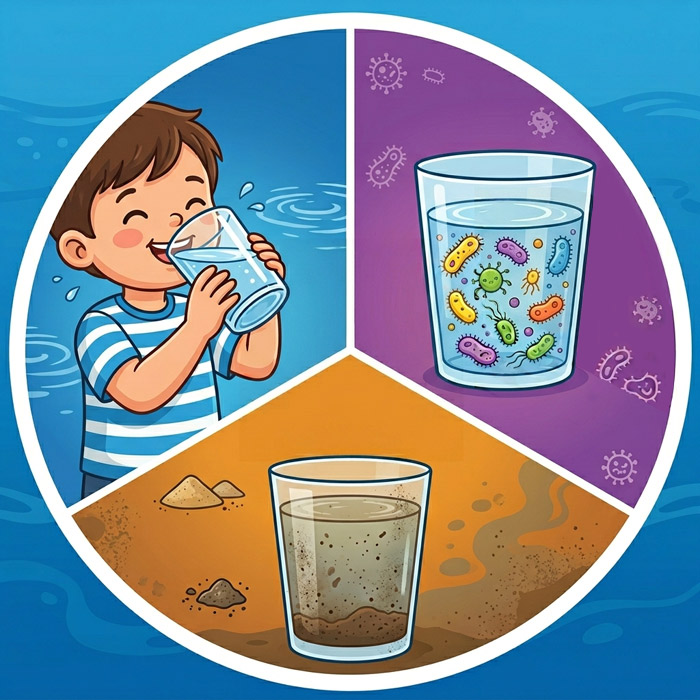
Water treatment, filtration, and purification describe different ways to improve water quality. This article explains what each term means, the problems they address, and how homeowners can choose correctly.
Water-related terms get mixed up because they sound similar and are used loosely in marketing. A homeowner might hear "filtered water" or "purified water" and assume both mean the same thing. In reality, each term points to a different goal and method.
This confusion can lead to problems. Someone may install a filter that improves taste but does nothing for bacteria. Another person may invest in a system that treats hardness but leaves chemical concerns untouched. The issue is not the equipment itself. The issue is misunderstanding what each system is meant to do.
Clear definitions help avoid wasted time, money, and frustration. Once the terms are understood, the path to the right solution becomes much simpler.
What Water Treatment Is
Water treatment is the broad category. It refers to any method used to improve water quality for a specific purpose. That purpose may be better taste, safer drinking water, or protection of plumbing and appliances.
Water treatment covers a wide set of problems. In many homes, the biggest concern is hard water. High mineral content leaves scale buildup on fixtures, shortens the life of appliances, and causes soap to work poorly. A water softener addresses this by removing calcium and magnesium.
Other common treatment targets include iron and manganese. These minerals can stain sinks, toilets, and laundry. They also give water a metallic taste. Sulfur is another issue, known for a strong rotten egg smell. Water treatment systems can remove or reduce these substances.
Acidity is another concern, especially with well water. Low pH can corrode pipes and cause metals to leach into the water. Water treatment can correct pH levels and reduce corrosion.
Water treatment also includes systems that address sediment, cloudiness, and general water clarity. It can include disinfection steps when needed, though that crosses into purification methods.
The key point is simple. Water treatment is not one specific device. It's a category that includes many tools designed to fix specific water issues in a home (or business).
What Water Filtration Is
Water filtration focuses on removing specific contaminants by passing water through a physical or chemical barrier. It's one part of water treatment, but it has a narrower role.
Filtration systems are designed to target visible and chemical impurities. Sediment filters remove dirt, sand, and rust. These are common in both well water and older plumbing systems. Removing sediment helps protect fixtures and improves water clarity.
Carbon filters are widely used for improving taste and odor. They reduce chlorine, which is commonly found in city water. They also reduce some volatile organic compounds and other chemicals that can affect smell and taste.
Reverse osmosis systems are a more advanced form of filtration. They use a semi-permeable membrane to remove a wide set of dissolved substances, including some heavy metals and salts. These systems are often installed at a kitchen sink for drinking water.
Filtration can also target specific contaminants such as lead or certain pesticides, depending on the filter design. But filtration doesn't always address biological risks. A standard filter may not remove bacteria or viruses.
In simple terms, filtration improves water by removing selected contaminants. It's effective for clarity, taste, and certain chemical concerns. It's not a complete solution for every water problem.
What Water Purification Is
Water purification aims to make water safer for consumption by removing or neutralizing harmful contaminants. This includes biological threats that can cause illness.
Purification methods focus on microorganisms such as bacteria, viruses, and parasites. Ultraviolet, or UV, systems are a common solution. UV light disrupts the DNA of these organisms, preventing them from reproducing and causing harm.
Distillation is another purification method. It involves heating water until it turns to steam, then condensing it back into liquid. This process leaves many contaminants behind, including heavy metals and certain chemicals.
Reverse osmosis can also be part of purification when used to remove a wide set of dissolved contaminants. In some systems, it's paired with additional steps to address a broader group of risks.
Chemical disinfection, such as chlorination, is also used in some settings. It kills microorganisms and helps maintain safe water over time.
Purification is focused on safety. It addresses risks that are not visible, such as pathogens and certain harmful chemicals. It's commonly used for drinking water, especially in homes with well water or uncertain water quality.
Water treatment, filtration, and purification are related, but they serve different roles. Treatment is the overall category that includes both filtration and purification methods.
Filtration removes selected contaminants, mainly particles and some chemicals. Purification goes further by addressing harmful microorganisms and a wider set of dissolved substances.
These terms are not interchangeable. A system can be a treatment system without being a purification system. A filter can improve taste without making water safer from bacteria.
Understanding this structure helps avoid confusion. It also helps homeowners focus on the actual problem rather than the label used in a product description.
Most homes use a combination of systems, each designed for a specific purpose.
Water softeners are used to treat hardness. They protect plumbing and improve soap performance. They don't remove bacteria or most chemicals.
Whole-house sediment filters are used to remove dirt and debris. They protect pipes and appliances from buildup. They also improve water clarity.
Carbon filters are used for taste and odor. They're common in both whole-house systems and under-sink units. They reduce chlorine and some chemicals.
Reverse osmosis systems are used for drinking water. They remove many dissolved substances and improve taste. They're usually installed at a single tap.
UV systems are used for disinfection. They're common in homes with well water. They target bacteria and other microorganisms.
Each system has a clear role. When combined correctly, they can address multiple concerns without overlap or gaps.
Why Water Source Changes Everything
The type of water entering a home plays a major role in what system is needed. City water and well water come with different challenges.
City water is treated before it reaches the home. It usually contains chlorine or similar disinfectants. The main concerns are taste, odor, and certain chemicals. Filtration is often the focus in these cases.
Well water is not treated before it enters the home. It can contain bacteria, iron, sulfur, and other naturally occurring substances. Both treatment and purification may be needed.
Why Water Testing Comes First
Choosing a system without testing the water is a guess. Taste and smell provide some clues, but they don't reveal everything.
A water test identifies what's present and at what levels. It can detect minerals, chemicals, and microorganisms that are not visible. This information guides the choice of equipment.
Without testing, it's easy to select a system that solves one issue while leaving another untouched. Testing removes that uncertainty and leads to a more accurate solution.
The process of choosing a system becomes clearer once the water is tested. The next step is to match the system to the problem.
If the issue is hard water, a softener is the appropriate choice. If the concern is chlorine taste, a carbon filter may be enough. If bacteria are present, a purification method such as UV is needed.
It helps to focus on the problem first, not the product name. Labels can be misleading, but water test results are direct and specific. Many products are labeled in ways that sound impressive but lack clear meaning. Terms like "filtered" or "pure" are used broadly, which adds to confusion.
Clear information helps cut through these claims. When the focus stays on specific problems and verified solutions, it becomes easier to avoid mistakes.
Water treatment, filtration, and purification each serve a distinct purpose in improving water quality. Treatment covers a wide set of methods, filtration removes selected contaminants, and purification focuses on safety. The right choice depends on accurate testing and a clear understanding of the problem.