CALL
CALL TEXT
TEXT
The Difference Between a Shallow Well and a Deep Well
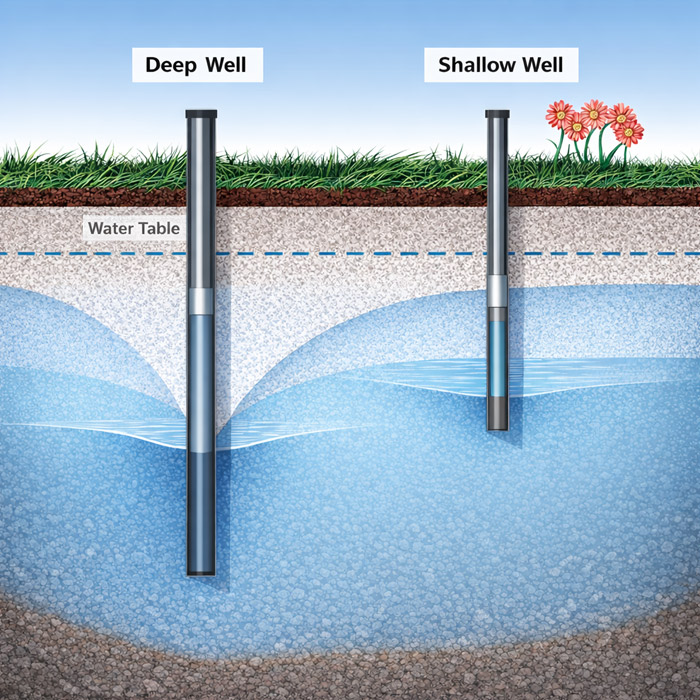
This article explains the differences between shallow wells and deep wells, including water source, reliability, quality, construction, cost, and how each type performs under changing conditions.
A well is a direct connection to groundwater, but not all wells reach the same depth or water source. The two main types are shallow wells and deep wells, and the difference comes down to how far they extend below the surface.
A shallow well typically draws water from groundwater that sits closer to the surface. This water is usually found above the first layer of dense soil or rock. A deep well reaches much farther down, tapping into water stored in underground layers that are more isolated from surface activity.
Depth alone does not define performance, but it plays a major role in how water behaves. That's why understanding the type of well on a property is important. It sets the stage for water quality, reliability, and long-term care.
How Rainfall Affects Shallow and Deep Wells
Rainfall has a direct and sometimes immediate impact on well water, especially in shallow wells. Because shallow wells draw water from areas closer to the surface, they respond quickly when rainwater moves through the ground. After heavy rain, water levels may rise, and the well may refill faster than usual. This quick response can also bring changes in water clarity and quality. Rainwater moving through soil can carry fine particles (such as sediment) and other material into the groundwater, which may lead to cloudy water or temporary changes in taste or odor. These changes can show up within a short time after a storm.
Deep wells are less affected by rainfall in the short term. The water they draw from is stored farther underground, where surface conditions have less immediate influence. While extended wet periods can still shift groundwater over time, the changes tend to develop slowly and are usually less noticeable.
Understanding how rainfall impacts each well type helps explain why shallow wells may show sudden changes, while deep wells usually remain more stable after storms.
How Seasonal Changes Affect Shallow and Deep Wells
Seasonal changes influence well water in a different way than rainfall. These changes happen over longer periods and are tied to shifts in temperature, groundwater levels, and overall water use.
Shallow wells tend to respond more to seasonal patterns because they rely on groundwater closer to the surface. During dry seasons, water levels may drop, which can reduce flow or lead to temporary shortages. In warmer months, increased biological activity in the ground can also change water quality.
Deep wells are less sensitive to short-term seasonal shifts, but they're not completely unaffected. Long periods of drought can lower deeper groundwater levels, while seasonal recharge can slowly improve supply. These changes tend to happen gradually rather than all at once.
Recognizing seasonal patterns helps explain why water supply or quality may shift over time, even when there are no visible issues with the well system itself.
Differences in Water Quality and Contamination Risk
Water quality is one of the most important differences between shallow and deep wells.
Shallow wells are closer to the surface, which means they're more exposed to outside influences. Runoff from rain, nearby activity, and natural soil movement can introduce bacteria, nutrients, and other substances into shallow groundwater. This increases the chance of contamination and may require more frequent testing and treatment.
Deep wells are usually better protected because the water is filtered through layers of soil and rock before reaching the well. These layers act as a barrier, reducing the chance of surface contamination. However, deeper water can carry higher levels of minerals such as iron, manganese, or hardness-related compounds. These don't always pose a health concern, but they can affect taste, smell, and plumbing over time.
Each type of well has its own set of water quality concerns. The key is understanding what to expect and how to manage it.
Differences in Well Construction and Equipment
The way a well is built depends on its depth and the conditions below the surface.
Shallow wells are typically less complex, with shorter casing and simpler installation methods. They may use jet pumps or other equipment designed for lower depths. These systems are usually easier to access and service, which can make routine maintenance more straightforward.
Deep wells require more extensive construction. The casing must extend farther down, and the well must be sealed to protect the water source. Submersible pumps are commonly used in deep wells, placed far below the surface to draw water upward. This setup can provide strong and consistent pressure, but it also means that repairs may involve more effort and specialized work.
The differences in construction and equipment shape how each system is maintained and how issues are addressed over time.
Shallow wells generally cost less to install because they don't require deep drilling or complex equipment. This lower starting cost can make them appealing in areas where groundwater is easy to access. However, they may need more attention over time due to changes in water quality or supply.
Deep wells usually involve higher installation costs. Drilling deeper requires more time, equipment, and expertise. The added depth and protection can lead to fewer water quality concerns related to surface activity.
Maintenance needs can differ as well. Shallow wells may require more frequent testing and treatment adjustments. Deep wells may have fewer contamination concerns but can involve higher repair costs if equipment fails.
Looking at both short-term and long-term costs helps provide a clearer picture of what each type involves.
How to Tell if a Property Has a Shallow Well or a Deep Well
Identifying the type of well on a property is not always obvious at a glance. The depth of the well is the most direct indicator, but that information may not be visible without records or inspection.
Well records, if available, can provide details about depth, construction, and water source. Local authorities or drilling companies may have this information on file.
The type of well pump may offer clues. Jet pumps are commonly used with shallow wells, while submersible pumps are typically found in deeper systems. This is not a strict rule, but it can help narrow things down.
A professional inspection can confirm the well type and provide useful details about its condition. This can be helpful when planning maintenance or addressing water quality concerns.
Which Type of Well (Shallow or Deep) Is Better for Different Situations
There is no single answer to which type of well is better. The right choice depends on the location, the characteristics of the land, and the needs of the household.
In areas where groundwater is close to the surface and conditions are stable, a shallow well may provide a reliable and cost-effective option. In locations where water levels vary or contamination is a concern, a deep well may offer better long-term stability.
The decision is shaped by local geology, water demand, and how much variation the system needs to handle. Each property has its own set of conditions that guide what works best.
Understanding these factors helps avoid frustration and leads to a system that fits the property.
Shallow wells and deep wells differ in depth, water source, reliability, quality, construction, and cost. Each type has its own strengths and challenges, shaped by local conditions and system design. Understanding these differences helps guide better decisions, supports proper maintenance, and leads to a more dependable water supply over time.